Bowen Therapy vs Massage — What’s the Difference?
It’s one of the most common questions I get asked: “Is Bowen Therapy like a massage?”
It’s a fair question — both involve hands-on therapy, both can help with pain and tension, and both leave you feeling better than when you walked in. But the way they work and what they’re doing to your body are quite different. Understanding the difference can help you decide which one is right for you.
What happens in a massage?
Massage therapy works by physically manipulating the muscles — kneading, pressing, and stroking the soft tissue to increase blood flow, release muscle tension, and ease tightness. It feels great and can provide real relief, particularly for general muscle soreness and stress.
The therapist stays in continuous contact with the body throughout the session, applying sustained pressure to work through the layers of muscle.
What happens in a Bowen session?
Bowen Therapy is quite different in its approach. Rather than sustained pressure, I use precise, gentle rolling movements over specific points on the body — targeting the connective tissue (fascia) that surrounds and supports your muscles, nerves, and organs.
One of the things that often surprises new clients is the pauses. After a set of moves, I will move on to another area of the body to allow those moves to be integrated. I might return to see if there is improvement or a requirement to repeat the moves again for further integration. Working around the body this way naturally allows each area its own rest time. These pauses are an important part of the process — your body is doing the work, and it needs space to do it.
Bowen is working with your nervous system and fascia to encourage your body’s own healing response, rather than physically forcing change through pressure.
The key differences
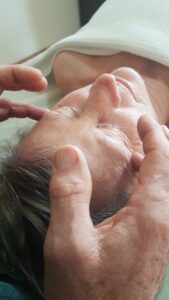
Touch: Massage uses firm, sustained pressure. Bowen uses light, precise moves with intentional pauses in between.
Target: Massage focuses primarily on muscles. Bowen targets the fascia — the connective tissue that links everything together throughout your body.
How it works: Massage works mechanically, directly loosening tight tissue. Bowen works by sending signals through the nervous system, prompting your body to reset and rebalance itself.
Clothing: Massage typically requires you to undress. With Bowen, I prefer to work on skin for the best results, but I always respect the client’s comfort — working through light clothing is absolutely fine if that’s preferred.
Response time: Massage relief is often felt immediately. With Bowen, there is usually some immediate response, with further changes continuing to unfold over the following days as your body integrates the treatment.
Which one is right for you?
Both have their place. Massage is wonderful for general relaxation and muscle soreness. But if you’re dealing with something more persistent — ongoing back pain, a frozen shoulder, sciatica, chronic tension that keeps coming back — Bowen may be worth exploring.
Because Bowen works with your body rather than on it, it can reach things that manual pressure alone can’t always address. And because it’s gentle and non-invasive, it’s suitable for all ages — from children through to seniors.
It also works well alongside other therapies. Many of my clients see a chiropractor or physiotherapist and find that Bowen complements their existing treatment beautifully.
Curious to try it?
If you’ve been thinking about Bowen Therapy but weren’t sure what to expect, I’d love to help. An Initial Consult gives us time to talk through what your body is presenting and for you to experience the therapy firsthand.
You can book online any time at bowenwithtrevor.com.au — Wednesday and Friday appointments are available in Willunga, SA.
Trevor | BOWEN with Trevor — Assisting your body’s healing process